

Dreadlocks in 'Rockstar': What Gets Lost in Appropriation
When Shakib Khan dons dreadlocks in 'Rockstar,' is it bold rockstar style or a Black cultural legacy stripped of its history? A look at appropriation, representation, and what quietly gets erased.

‘রকস্টার’ সিনেমায় জটা চুলে (ড্রেডলকস) হাজির হলেন শাকিব খান। বিষয়টি অনেকের নজর কেড়েছে। তবে এ নিয়ে এখনো কোনো গভীর পর্যবেক্ষণ বা আলোচনা চোখে পড়েনি। দর্শকদের জন্য কি এটি নিছক চুলের স্টাইল, নাকি আরও কিছু? তার এ কালচারাল এপ্রোপ্রিয়েশন বা সাংস্কৃতিক আত্মীকরণের পর্যালোচনা এই লেখায়।
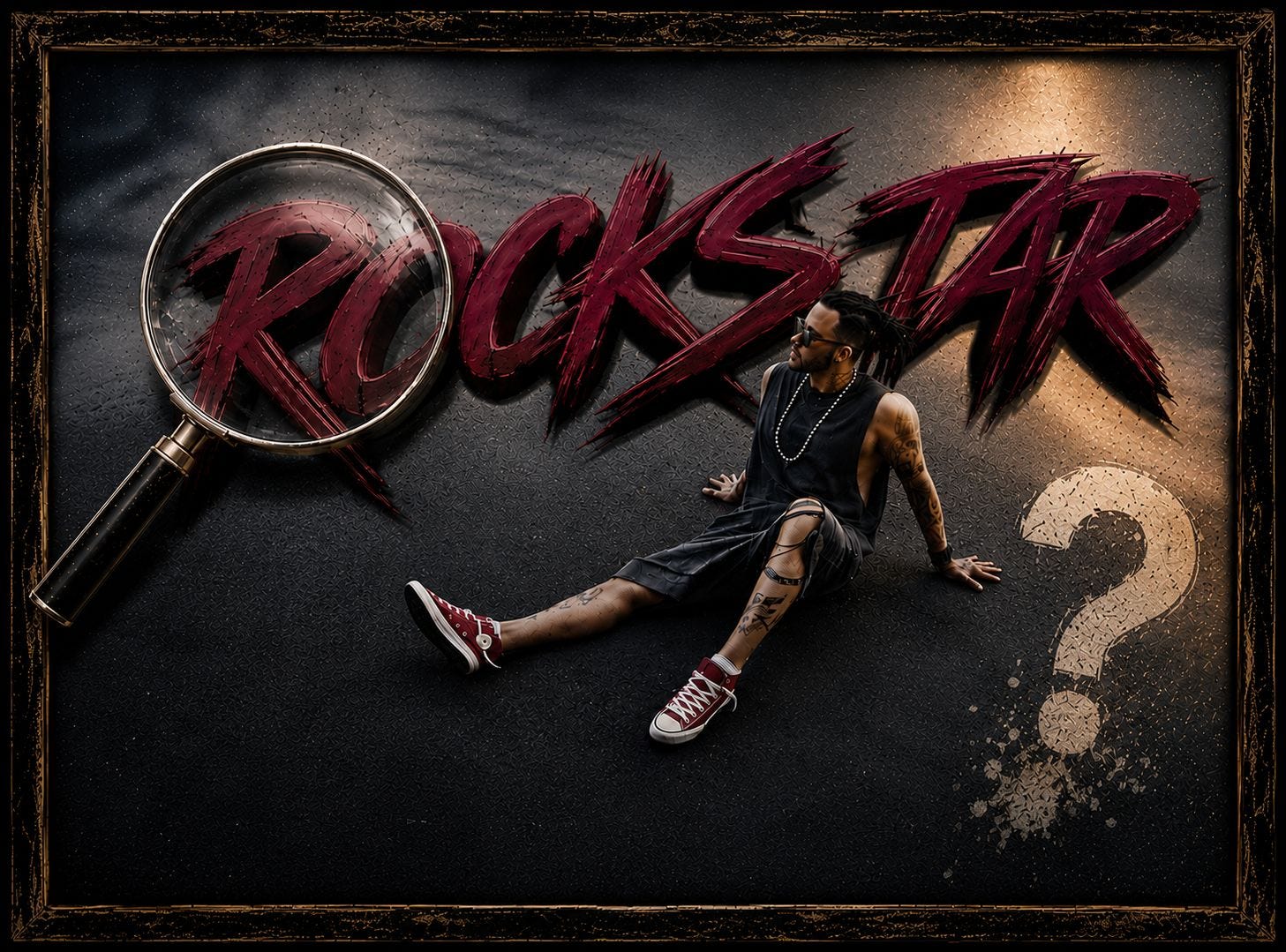
The recently released Bangladeshi film Rockstar — directed by Azman Rusho and released over Eid-ul-Azha in 2026 — has generated considerable public attention, particularly because of Shakib Khan’s dramatic on-screen transformation into the character Agun. Agun is a musician who rises from a middle-class background to national fame, and his journey through stardom, romance, and personal struggle, including addiction, forms the center of the film’s narrative. While the story follows many familiar conventions of the South Asian commercial musical drama, one aspect of the film’s promotional imagery immediately caught my attention. In several posters and promotional materials, Shakib Khan appears with dreadlocks, a hairstyle strongly associated with Black communities across Africa and the Caribbean.

Many viewers may see this simply as a stylistic choice intended to create a rebellious, edgy, or globally recognizable rockstar image. Yet the image raises a more important question: what happens when a cultural symbol is detached from the people, histories, and daily lives that gave it meaning?
What makes the use of dreadlocks particularly interesting in Rockstar is that the hairstyle appears to work as a look rather than as part of the story. Publicly available descriptions of the film portray its protagonist, Agun, as a musician navigating fame, romance, personal struggles, and the commercial music industry. Reviews of the film emphasize themes of celebrity culture, emotional conflict, and the rise-and-fall arc, common to story to many South Asian formulaic dramas. One of the reviewers argued, the film reaches for a Western image of rock rebellion rather than the lived history of Bangladesh’s own rock scene—its styling outpacing its storytelling. The narrative shows little sign of engaging with the historical, cultural, spiritual, or political traditions from which dreadlocks draw their meaning. The hairstyle becomes an exotic visual element to function primarily as a visual marker of rebellion, artistic individuality, and rockstar cool, rather than a cultural practice embedded within specific histories of race, colonialism, and resistance.
This observation matters because the meaning of cultural symbols is shaped not only by their appearance but also by the contexts in which they are used. If dreadlocks are presented merely as shorthand for being unconventional, edgy, or musically rebellious, then the hairstyle becomes detached from the histories of African identity, Rastafarian spirituality, anti-colonial resistance, and Black cultural expression that helped make it meaningful in the first place. In such cases, the symbol remains visible while the history behind it gradually disappears.
For many Black communities, dreadlocks are not merely a fashion statement. They are connected to histories of identity, spirituality, resistance, and cultural pride. In the Caribbean, particularly Jamaica, dreadlocks became closely associated with the Rastafari movement, a religious and cultural movement that emerged during the 1930s among descendants of enslaved Africans living under the continuing legacies of colonial rule.
For Rastafarians, dreadlocks carried profound symbolic significance. The Rastafarian rejection of capitalism and colonialism included wearing their hair naturally in locs to defy Western standards of beauty. Inspired in part by biblical interpretations, particularly the Nazarite vow that discouraged the cutting of hair, dreadlocks became an outward expression of spiritual commitment and devotion. Yet they also represented something broader: a rejection of colonial standards of appearance and a refusal to conform to Western definitions of beauty and respectability. During periods when Black hair textures and African features were routinely stigmatized, Rastafarians embraced dreadlocks as a visible affirmation of African identity and cultural pride.
Because of this association, dreadlocks often became targets of discrimination. Rastafarians were frequently portrayed as dangerous, uncivilized, or socially deviant by colonial authorities and mainstream media. Wearing dreadlocks was therefore not simply a matter of personal style. It often carried social, economic, and political consequences. The hairstyle became intertwined with struggles over race, belonging, dignity, and resistance. Like the Afro during the Black Power era, dreadlocks transformed Blackness from a mark of shame into a source of pride and self-definition.
At the same time, the history of Black hair cannot be separated from the texture of Black hair itself. People of African descent typically have tightly coiled, highly dense hair that requires specific methods of care and maintenance. Hairstyles such as dreadlocks, twists, braids, and cornrows emerged not only as cultural traditions but also as practical responses to the characteristics of natural hair. They grew out of biology, environment, culture, and history together, rather than through fashion alone. This distinction matters.
When we see dreadlocks on a Black individual, we are often looking at a hairstyle that emerged naturally from both a particular hair texture and a specific cultural history. When the same hairstyle is artificially reproduced on someone whose hair texture and cultural background are fundamentally different, the meaning changes. The hairstyle becomes less about identity and lived experience and more about visual performance.
This is where the idea of cultural appropriation becomes relevant. Cultural appropriation occurs when elements of a historically marginalized culture are borrowed and repurposed outside their original context, often without meaningful engagement with the history and experiences attached to them. Cultures constantly influence one another, and cultural exchange itself is not inherently a problem. The concern arises when symbols are removed from the communities that created them and turned into fashion items to be bought and sold, while their original meanings are ignored or forgotten.
Hollywood and global popular culture provide numerous examples of this. Kim Kardashian has repeatedly faced criticism for wearing traditionally Black hairstyles, including cornrows and braids. In one notable instance, she referred to her hairstyle as “Bo Derek braids,” a label many critics argued erased the much older African origins of the style and attached its legitimacy to a white celebrity rather than to the communities that developed it. Katy Perry has faced similar criticism for incorporating East Asian cultural imagery into performances and music videos, often reducing meaningful traditions to exotic visual aesthetics.
Selena Gomez generated comparable debate when she appeared wearing a bindi during a commercial performance of her song Come & Get It. For many South Asians, particularly within Hindu traditions, the bindi carries religious, cultural, and symbolic significance. Critics argued that its use as a stage accessory transformed a meaningful cultural symbol into an exotic visual ornament detached from its historical and spiritual context. Whether one agrees with that criticism or not, the controversy illustrates a broader concern: cultural symbols often lose their original meanings when they are incorporated into global entertainment industries primarily for aesthetic appeal.
This pattern is not unique to Hollywood. Bangladeshi commercial cinema has its own long habit of borrowing whatever looks striking — from Bollywood-style item numbers to Western gangster and biker aesthetics — often with little connection to story or context. Seen this way, the dreadlocks in Rockstar are not an aberration but an extension of a familiar industry reflex: reaching for an imported image of cool, and treating the surface as the substance.
The issue is not whether people from different cultures can wear particular hairstyles or borrow cultural elements. Cultural exchange has always been part of human history. The question is how those symbols are represented, and whether their histories remain visible after they are borrowed.
And that is where the real danger lies. When a living heritage is lifted from the people who shaped it and sold purely as a look, its history is quietly erased. What remains is the image; what disappears is the struggle that gave the image meaning — and the communities that created it are pushed aside twice over, first in life and then in the way they are represented.
This concern is closely connected to the work of cultural theorist Stuart Hall. Hall argued that images do not simply mirror reality; they actively shape how we understand it. Symbols and cultural practices carry no fixed meaning on their own — their meaning is made through social and cultural context. When a symbol is removed from the conditions that produced it and reintroduced somewhere new, its meaning can shift, weaken, or change entirely.
Seen this way, the concern surrounding dreadlocks is not merely about who wears a particular hairstyle. It is about how the symbol is represented and what meanings become visible or invisible in the process. When dreadlocks are presented primarily as a visual marker of rebellion, coolness, or celebrity style, audiences may consume the image while remaining disconnected from the histories of colonialism, racism, spirituality, and resistance that helped shape its significance.
Dreadlocks are therefore not simply a hairstyle. They are part of a larger story about identity, resilience, spirituality, resistance, and the ongoing struggle of Black communities to reclaim dignity in societies that historically devalued Black bodies and Black aesthetics. Any representation that borrows such symbols should acknowledge that history rather than merely consume its visual appeal.
So, when a South Asian superstar adopts a hairstyle whose roots lie in the experiences, struggles, and cultural traditions of Black communities, are we witnessing a meaningful engagement with that history, or simply the transformation of a deeply significant cultural symbol into another marketable image of rebellion and coolness?
About the Author
Dr. Sherin Farhana is a communication and media scholar. Her research centers on social movements, ethical business communication, and the role of digital communication in advancing social change. She can be reached at sherin.moni@nicholls.edu.
Disclaimer: The views expressed in this article are the author's own and do not necessarily reflect The Insighta's editorial stance. However, any errors in the stated facts or figures may be corrected if supported by verifiable evidence. | A guest post by
|
This writing is very meaningful and well organized to understand the cultural shift happened through in various ways including films.