

Tarique Rahman: From Exile to Prime Minister of Bangladesh
Tarique Rahman returns after 17yrs in exile, wins Feb 12 election, and becomes the PM. Bangladesh has hopes for democratic renewal—now faces stability, reform, economy and India ties; pledges revival.

তারেক রহমানের নেতৃত্বে বাংলাদেশ এখন এক সন্ধিক্ষণে দাঁড়িয়ে আছে। বাংলাদেশ কি এই গণতান্ত্রিক অগ্রযাত্রা ধরে রাখতে পারবে? সেটি কেবল তারেক রহমানের প্রতিশ্রুতির ওপর নয়, বরং সেসব প্রতিশ্রুতির কতটা সতর্কভাবে, আইনসম্মতভাবে এবং অন্তর্ভুক্তিমূলকভাবে বাস্তবায়িত হয় তার ওপর নির্ভর করবে।
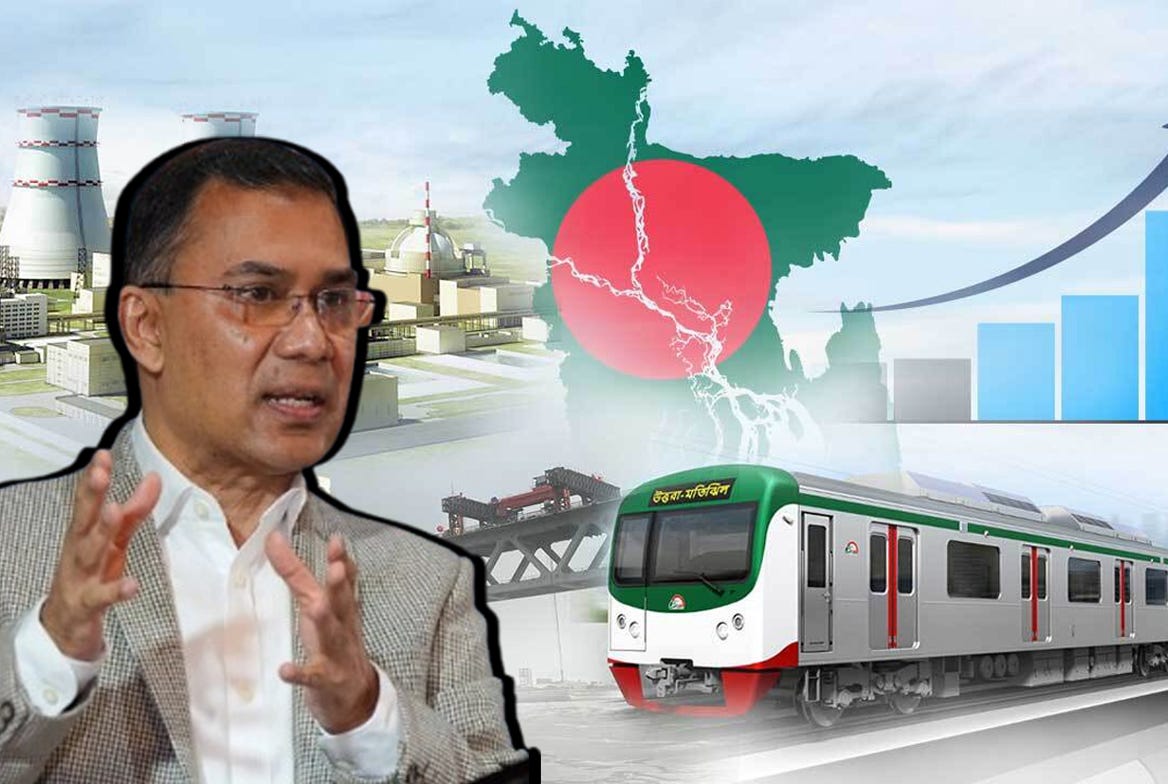
Bangladesh has entered a new political moment. After 17 years in exile in London, BNP leader Tarique Rahman returned home, won the February 12 national election, and was sworn in as prime minister on February 17. His rise, shaped by dynasty, exile, and a post-2024 political reset, has reignited public hope for democratic renewal, while raising high-stakes questions about stability, constitutional reform, economic recovery, and Bangladesh’s regional diplomacy.
A Political Legacy
Tarique Rahman’s political journey is inseparable from Bangladesh’s modern history. Born into the formidable political dynasty of Ziaur Rahman, a former president, and Khaleda Zia, one of the country’s most influential prime ministers, Rahman grew up steeped in nationalist politics.
According to BNP’s official website, Rahman formally entered politics in the late 1980s, joining the BNP at the local level and rising through party ranks during the early 1990s. By 2002 he was one of the party’s key strategists, a trusted lieutenant to his mother as the BNP governed Bangladesh with alternating power with the Awami League.
Even in his early political years, Rahman’s ambition and growing influence brought both praise and criticism. Supporters admired his leadership, but critics said he was the real decision-maker behind the scenes. They accused him of building networks of favoritism that shaped the BNP’s image in the 2000s.
Leadership from Afar
The turning point came in 2007, amid a military-backed caretaker government’s sweeping anti-corruption drive. Arrested and detained, Rahman endured months of imprisonment before being released on bail in 2008 and departing for the United Kingdom ostensibly for medical treatment.
From London, Rahman did not retreat from politics. In 2009 he was elected Senior Vice Chairman of the BNP. Later, He became the party’s acting chairman in 2018 when his mother faced legal and health challenges. During these years, Rahman oversaw BNP strategy from afar, navigating legal troubles and internal party crises while cultivating support among the Bangladeshi diasporas.
For many abroad, Rahman’s London years symbolized the frustrations and limits of Bangladesh’s political system. They saw him as a strong opposition leader held back by legal barriers and a rigid political structure that allowed little space for real competition.
Return and Renewal
The political terrain in Bangladesh shifted dramatically in 2024 with a mass uprising that ended the fifteen-year rule of then Prime Minister Sheikh Hasina. With her exit from power and flee to India, the legal roadblocks that had barred Rahman’s return were systematically dismantled. Courts overturned his multiple convictions, clearing the path for his homecoming.
On December 25, 2025, after more than 17 years away, Tarique Rahman stepped onto Bangladeshi soil. Towering crowds greeted him, underscoring a potent mix of nostalgia, loyalty, and yearning for change. It was a moment of laden with symbolism, the culmination of a long exile, and the beginning of a renewed political journey.
Barefoot on the tarmac, he pledged to unite the country and build a “Bangladesh for all,” seeking to broaden his appeal beyond traditional BNP supporters while confronting the legacy of past governance.
“I have a plan”
Rahman’s campaign was built on two fundamental pillars: democratic renewal and economic revitalization. Emphasizing transparency, accountability, and inclusive governance, Rahman presented a stark contrast to the entrenched patronage that many voters associate with the previous decade.
Key pledges included direct support to families through a “family card” social safety initiative and a “farmer card” scheme to subsidize agricultural input costs, offers intended to alleviate economic distress and redistribute opportunity more broadly.
Moreover, Rahman sought to rebrand the BNP as a centrist and pragmatic force, committed to pluralism and national unity rather than polarization. In speeches that resonated widely, he stressed reconciliation across communities and sought to anchor his foreign policy in balanced regional cooperation.
On December 25, 2025, Tarique Rahman said in his homecoming speech, “… I have a plan for the people of my country, for my country,” indicating his readiness to lead the country.
Electoral Triumph and Democratic Stakes
The February 12 election was widely reported as the most credible national contest in nearly two decades (https://en.prothomalo.com/bangladesh/3i9i51ul0q). In this election, Rahman-led BNP alliance won 212 seats, followed by 77 for the Jamaat-led alliance, out of the 297 parliamentary seats for which results were announced.
This victory carries profound implications for Bangladesh’s democratic trajectory. After years of single-party dominance and political marginalization of the opposition, the electoral success of Rahman represents not merely a transfer of power but a reassertion of competitive politics.
A New Era Ahead?
On February 17, Tarique Rahman was sworn in as the new Prime Minister of Bangladesh. His journey from nearly two decades in exile to the highest office in the country reflects a dramatic political transformation.
As he assumes office, Rahman faces challenges that are both urgent and historic, requiring careful leadership, bold reform, and a steady hand to guide the nation through a critical moment.
Political stability must come first. In the absence of Awami League from power, tensions involving its leaders and activists could create challenges for the BNP-led government. At the same time, Rahman must work to bridge deep political divisions and promote a more cooperative environment among competing parties.
A second major challenge centers on constitutional reform linked to the July Charter. The BNP government has not fully committed to these reforms, yet pressure from opposition parties and the public continues to grow. While constitutional reform offers an opportunity for democratic renewal, it also carries risks if pursued without consensus and procedural clarity. Managing these competing pressures will require political caution and strategic compromise.
Economic pressure also remains significant. Rising inflation and the increasing cost of living demand immediate action, alongside the urgent need to create meaningful employment opportunities for a restless youth population. Strengthening governance, improving bureaucratic efficiency, tackling corruption, and maintaining law and order without undermining civil liberties are equally critical tasks.
Finally, managing delicate regional and international relationships, particularly with India, will test Rahman’s diplomatic skills as he seeks to safeguard national interests while maintaining constructive cooperation with neighbors. How he balances these priorities will determine whether his premiership becomes a period of meaningful transformation or another chapter of unmet expectations.
Under Rahman’s leadership, Bangladesh now stands at a crossroads. The era of responsibility has begun. Whether this moment evolves into a truly new democratic chapter will depend not only on bold promises, but on how carefully, lawfully, and inclusively those promises are fulfilled.
About the Author
Dr. Zahed Arman is an assistant professor in the Department of Communication, Media and Theatre at Mississippi State University. His research focuses on political campaigns and audience behavior. He can be reached out at za231@msstate.edu
Disclaimer: The views expressed in this article are the authors' own and do not necessarily reflect The Insighta's editorial stance. However, any errors in the stated facts or figures may be corrected if supported by verifiable evidence. | A guest post by
|