

Operation Epic Fury: Strategic success or overreach?
Does the U.S.-Israel–Iran ceasefire signal success—or expose limits of coercive power? Iran’s resilience, asymmetric strategy, and economic fallout suggest a costly and unresolved strategic stalemate.

যুক্তরাষ্ট্র–ইসরায়েল–ইরান সংঘাতের সাময়িক যুদ্ধবিরতি কি প্রকৃত সমাধান, নাকি কৌশলগত সীমাবদ্ধতার ইঙ্গিত? একদিকে একতরফা হামলা ও সামরিক সাফল্যের দাবি, অন্যদিকে ইরানের প্রতিরোধক্ষমতা, অসম যুদ্ধনীতি ও বৈশ্বিক অর্থনৈতিক প্রভাব—সব মিলিয়ে এই সংঘাতকে দীর্ঘমেয়াদি ও ব্যয়বহুল অচলাবস্থার দিকে ঠেলে দিচ্ছে।
The U.S.-led Operation Epic Fury in Iran, which escalated into open conflict in late February 2026, has now reached an uncertain pause. The two-week ceasefire is undoubtedly a diplomatic breakthrough, but it neither fully resolved the crisis nor addressed the strategic contradictions at the core of the conflict. Trump has been framing the agreement as evidence that the military campaign has met its objectives, including reopening critical energy routes and weakening Iranian capabilities. In reality, the ceasefire can be seen less as a resolution and more as a pause – meaning the war has paused, but not ended, for now, without a decisive outcome.
This conflict could be considered one of the most consequential gambles in recent American foreign policy. While the U.S. portrays this operation as necessary to eliminate Iran’s capabilities and quickly deter nuclear ambitions, the evidence so far suggests a rather vague and uncertain outcome. The very need for a ceasefire brokered at the last minute under intense international pressure suggests limits to coercive strategy. The agreement is conditional, temporary, and embedded within ongoing negotiations, reflecting not a decisive victory but a mutual recognition of escalating costs.
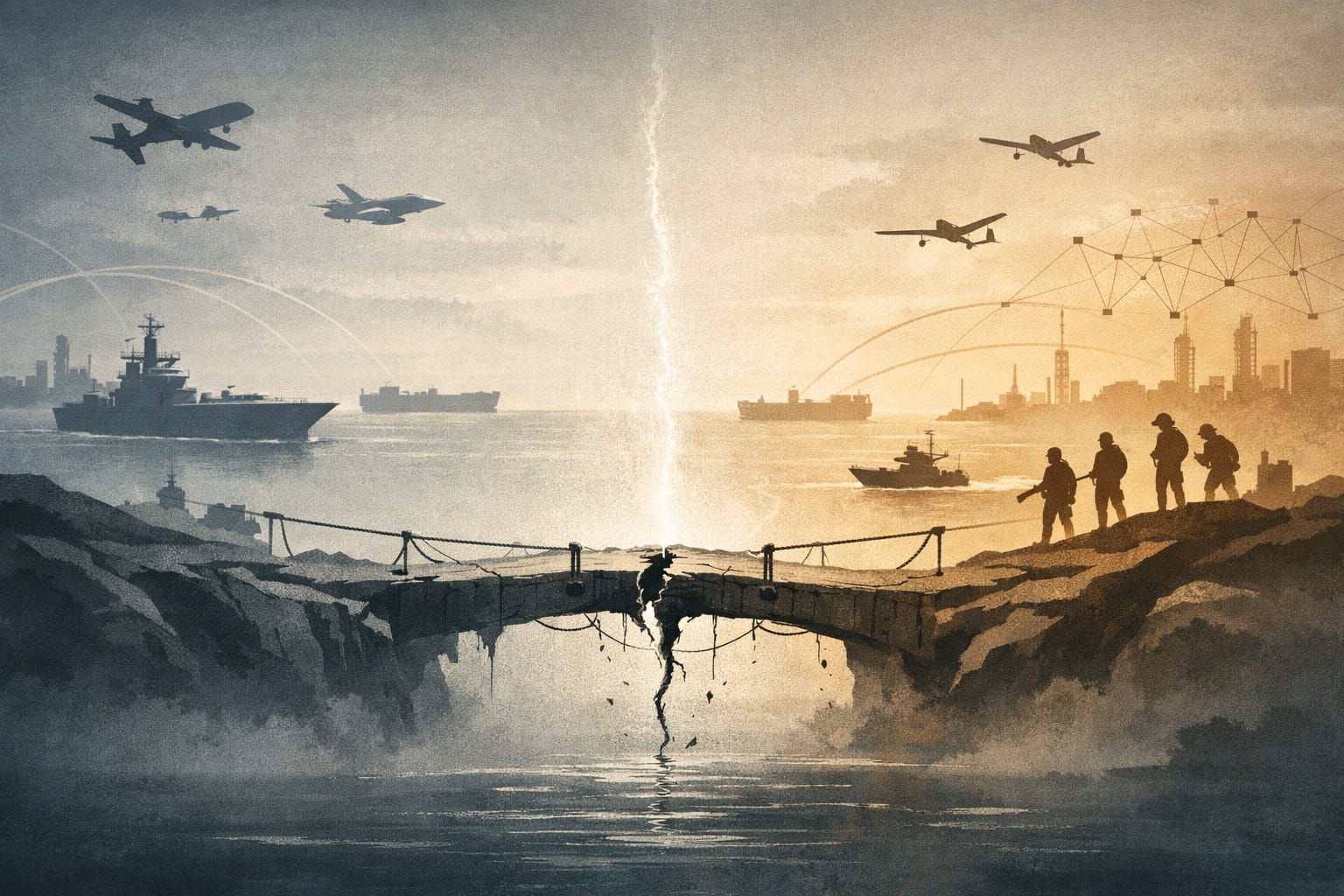
From a purely tactical standpoint, the US-led operation has been highly effective. The killing of senior officials, such as the Supreme Leader Ayatollah Ali Khamenei, Security Chief Ali Larijani and IRGC Navy Commander Rear Admiral Alireza Tangsiri, has supposedly shattered Iran’s command-and-control hierarchy. According to a report by the Institute for the Study of War (ISW), combined force airstrikes have targeted over 13,000 locations as of late March, successfully eliminating 80% of Iran’s air defense systems and weakening its capacity to carry out large-scale coordinated missile attacks. Precision airstrikes have targeted Iran’s missile production sites, launch infrastructures, and storage facilities, and damaged parts of its ballistic missile program. The short-term tempo of missile launches was lowered due to damage to key elements of Iran’s command and control system and several key missile facilities.
U.S. focus on technological superiority and stand-off strike capabilities does not make such havoc unexpected. Washington’s count of the damaged Iranian assets is staggering. White House Press Secretary Karoline Leavitt confirmed on March 30 that the US has destroyed 150 Iranian vessels, including 92% of the country’s largest vessels. After initial targeting of the nuclear and missile sites, strikes have broadened to include defense industrial bases such as the Saba Battery warehouse and key research facilities at Imam Hossein University.
However, tactical advantage does not ensure a decisive victory, therefore, success in this war is far from being determined. The ceasefire itself complicates any claim of strategic success. While Trump claimed the ‘annihilation of the Iranian Navy’ and the ‘obliteration of Iran’s potential nuclear capability’, the U.S. lacked a clear and consistent objective in this war. His rhetoric fluctuated between demanding unconditional surrender and his March 24 claim that Iran wants to ‘make a deal so badly’ – a statement Iran’s parliament speaker Mohammad Bagher Ghalibaf called an attempt to “escape the Quagmire”. This strategic ambiguity creates further difficulties. If the objective was to decisively neutralize Iran’s military capabilities, the outcome falls short of that goal.
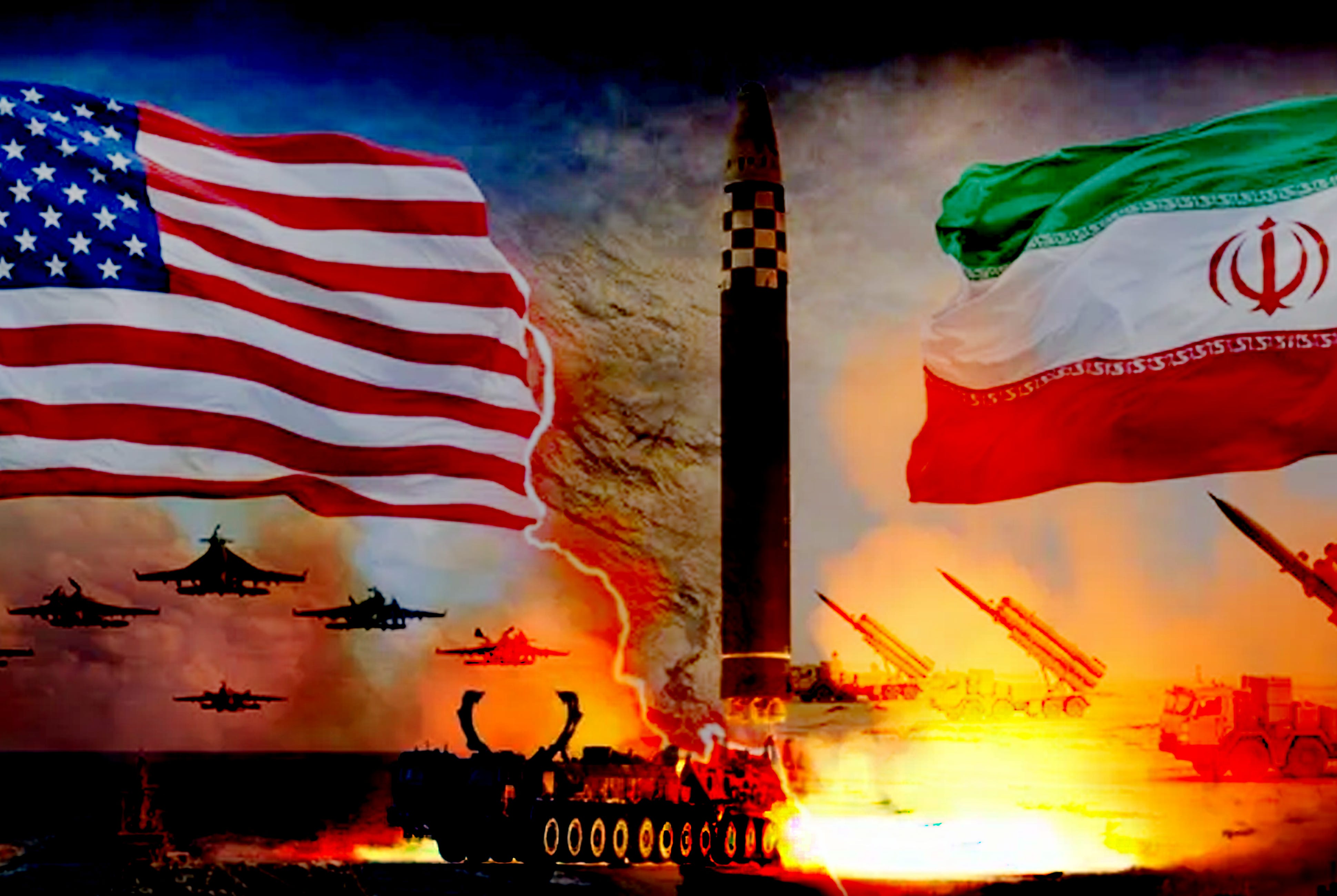
Historically, U.S. strategy toward Iran has fluctuated between containment and coercion, shaped by decades of mutual distrust that predate the Iranian Revolution. These tensions trace back to 1953, when a CIA- and U.K.-backed coup overthrew the democratically elected Prime Minister Mohammad Mosaddegh and consolidated the rule of Shah Mohammad Reza Pahlavi—an episode that continues to inform Iranian perceptions of U.S. intervention. The 1979 Iranian Revolution further entrenched this adversarial relationship, redefining Iran as a central challenger to U.S. influence in the Middle East.
The current war underscores a shift from indirect confrontation to overt military engagement, signaling a move from deterrence by denial to deterrence by punishment. Iran has remained one of the most resilient adversaries of the United States in the region. Its military doctrine is designed to absorb shocks, adapt under pressure, and retaliate asymmetrically, prioritizing survivability over conventional battlefield dominance. A key element of this approach is Iran’s “mosaic defense” strategy, which decentralizes command structures and disperses military capabilities across semi-autonomous units to ensure continuity even under heavy attack. As a result, even the destruction of individual facilities or the elimination of key leaders does not fundamentally weaken the system, as operational capacity can be reconstituted through distributed networks.
As Thomas Schelling prominently argued, coercion succeeds only when the adversary is both willing and able to concede. The ceasefire suggests that neither side reached that threshold decisively. Iran’s strategy of endurance under pressure is deeply rooted in its strategic culture. Rather than seeking rapid victories, it engages in “wars of attrition,” in which time—not firepower—becomes the decisive factor in imposing long-term costs on its adversaries.
Iran’s institutional capabilities—including ballistic missiles, drones, cyber operations, and proxy networks across the Middle East—have reinforced this approach. These asymmetric capacities have complicated U.S. efforts to counter Iran through conventional means, with several regional assets falling prey to retaliatory attacks. Coordinated drone and missile strikes on Israel and U.S. military installations have caused casualties and disrupted infrastructure and logistics.
Thus, while the United States has demonstrated overwhelming military power, the conflict is not a one-sided display of dominance but a costly and prolonged escalation. In this context, the ceasefire reflects not victory but limits—an implicit recognition by both sides that continued escalation would impose unacceptable costs without ensuring decisive gains.
From a grand strategic perspective, the war started to raise questions about the efficacy of deterrence. Deterrence depends on convincing the enemy that the cost of continued defiance outweighs the benefits. In Iran’s case, deterrence seems to fail because either the perceived costs are not enough or the stakes of its survival are too high to give up. Instead, the new line of leaders seems to be even harder-liners. The nation is already considering withdrawing from the Non-Proliferation Treaty (NPT). This reflects the classic security dilemma, in which one state’s efforts to increase security trigger greater insecurity and a reaction from its adversary. Thus, the war risks creating the very results it aims to avoid. It does not seem to serve U.S. interests either. Threatening Iran’s survival can be counterproductive and might strengthen the hardline groups within Iranian politics. In this light, the ceasefire does not resolve the underlying conflict - it merely freezes it. The structural drivers of tension remain intact, and the risk of renewed escalation persists.
The Hormuz dilemma and the economic costs:
The war has disrupted global energy markets since Iran has effectively closed the Strait of Hormuz. Around 20 million barrels per day (mb/d) of crude oil and petroleum products passed through the Strait in 2025, which is roughly 25% of global seaborne oil trade. Approximately 20% of the world’s liquefied natural gas (LNG) trade passes through it, with much of it sourced from Qatar. Due to the blockade, the price of fuel oil has jumped from a pre-war level of $67 per barrel to $119–$120 per barrel in March and early April 2026. This rise in oil prices causes economic problems worldwide and complicates domestic economic management in the United States. Higher energy prices impact all sectors, including transportation, food costs, and manufacturing. By targeting energy infrastructure, like the retaliatory strikes on Qatari gas fields, Iran has diminished the US advantage in conventional warfare by creating widespread, costly damage for Washington’s allies. If the ceasefire breaks, a protracted war with Iran could result in a global depression that neither the US nor its allies is prepared to manage. Before the ceasefire, Iranian officials stated that the Strait of Hormuz would never return to its former state, especially for America and Israel.
During the first round of negotiation, Iran indicated that it would like to retain control of the strait and proposed a plan to charge a fee of $2m for each ship that passes through the waterway. After the failed negotiation of the first meeting, Trump has responded with a naval blockade of the strait by threatening to eliminate any ship trying to enter or leave Iranian ports. This has made the oil market further vulnerable. The U.S. cannot take over the Strait of Hormuz since Iran uses asymmetric threats like small agile boats, mines, and shore-based missiles that are difficult for large U.S. warships to counter in the narrow strait. The shipping lanes are very close to the Iranian coastline, leaving little reaction time to intercept drones or missiles. The U.S. will need heavy air power stationed above the Strait and the Gulf, and warships stationed in proximity. Overall, it is not sustainable for the U.S. Navy to dramatically seize control of the strait.
The financial impact on the United States has been enormous, with the Center for Strategic and International Studies (CSIS) reporting that the first six days of Operation Epic Fury cost a staggering $11.3 billion in unplanned expenses. As the conflict grew and shifted toward less costly munitions, the total cost increased to an estimated $16.5 billion by day 12, mainly due to the high cost of standoff missiles and the repair of damaged regional infrastructure. These figures, which exclude long-term veterans’ benefits and domestic security increases, indicate the war is costing nearly half a billion dollars daily even during its lower-intensity phases. These economic costs are occurring without any clear strategic gains. The outcome is a disrupted global market, strained allied relations, and doubts about America’s leadership. US allies have expressed concern about a potential escalation of conflict, as they fear further disruption of stable energy supplies.
All these demonstrate a case of strategic overreach, where a country’s commitments and expenses surpass its capacity to sustain them and ultimately weaken its long-term power and credibility. Despite the projection of power and short-term degradation of adversaries’ capability, the US is struggling to translate those gains into durable political outcomes. It represents one of the persistent problems of U.S. interventions from the Iraq War to Afghanistan – the gap between military means and political ends. Initial battlefield success always gives way to protracted conflict. The combination of high costs, shifting goals leading to uncertain victory, and the risk of counterproductive outcomes has made Operation Epic Fury a strategic failure. It is not clear how the negotiations will go over the next few days. The ten-point plan from Iran does not seem to be what Trump would fully agree to, and partial acceptance from the U.S. would mean reverting to the same pre-war state of animosity.
If the war drags on and Iran continues fighting back, the sunk costs for the U.S. will be substantial. Thus, the current war risks raising questions about the underlying assumptions guiding U.S. foreign policy.
About the Author:
Umme Salma Tarin is an Assistant Professor at Department of International Relations at Bangladesh University of Professionals and currently pursuing PhD at the University of Delaware. She can be reached at tarin@udel.edu .
Disclaimer: The views expressed in this article are the author’s own and do not necessarily reflect The Insighta’s editorial stance. However, any errors in the stated facts or figures may be corrected if supported by verifiable evidence. | A guest post by
|
A timely and well thought piece. Good job, Tarin!