

How Justified Is the Debate Over Handing Laldia Terminal to Foreign Operators?
Bangladesh’s move to give Laldia Terminal to a foreign operator is framed as reform but seen as risky, sparking debate on sovereignty and security versus lessons from global practices.

চট্টগ্রাম বন্দরের লালদিয়া টার্মিনাল নির্মাণ ও পরিচালনার দায়িত্ব বিদেশি কোম্পানিকে প্রদান ইস্যুতে বিতর্ক চলছে বাংলাদেশে। অন্তর্বর্তী সরকারের দাবি, বন্দরের আধুনিকায়ন, সক্ষমতা বৃদ্ধি ও দুর্নীতির রাশ টেনে ধরতে এই পদক্ষেপ জরুরি। তবে বিরোধীরা মনে করেন, এর ফলে ঝুঁকিতে পড়বে দেশের সার্বভৌমত্ব, নিরাপত্তা ও ভবিষ্যৎ অর্থনীতি। এই বিতর্ক সামনে রেখে বন্দর পরিচালনার দায়িত্ব বিদেশিদেরকে প্রদান ও ফলাফল নিয়ে অন্যান্য দেশের অভিজ্ঞতা আলোচনা করা হয়েছে লেখাটিতে।
Bangladesh’s decision to involve a foreign terminal operator in the development and operation of the proposed Laldia Terminal at Chattogram Port has triggered a national debate over efficiency, sovereignty, and long-term economic strategy. At the center of the controversy is APM Terminals, a Denmark-based global port operator selected under a long-term concession framework to build and manage the new terminal.
The reasons for such a decision were influenced by the widespread corruption and inefficiency of the port, evident for a long term. According to official assessments, container dwell times at Chattogram remain significantly higher than global averages, contributing to shipment delays and higher logistics costs for exporters, particularly in the ready-made garments sector. The government maintains that engaging an experienced international operator can address these shortcomings by introducing modern terminal management systems, advanced equipment, and performance-based operational standards.
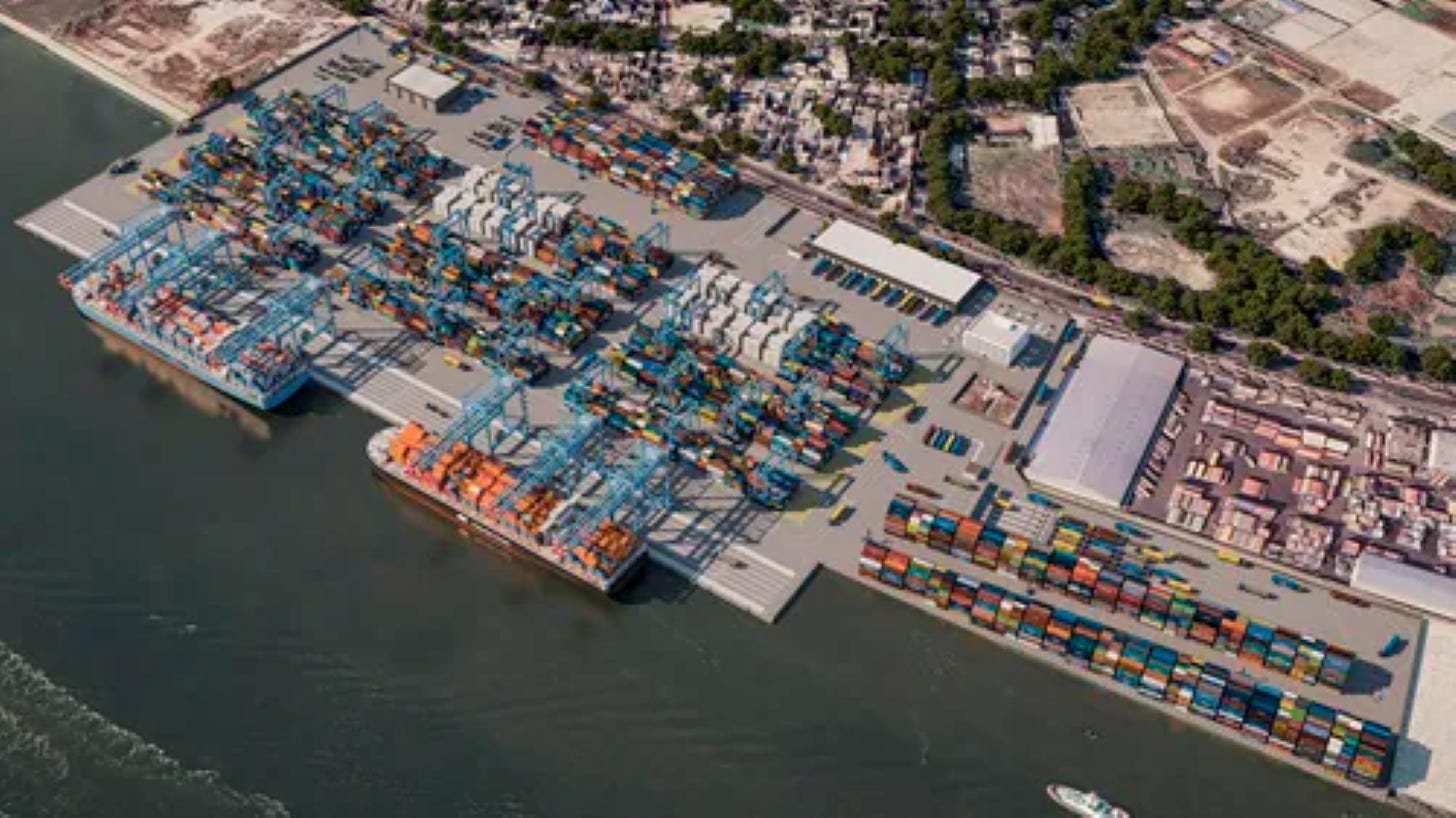
Under the proposed model, APM Terminals would finance, construct, and operate the terminal for a fixed concession period, after which the facility would revert fully to the state. Authorities stress that the arrangement does not involve the sale of port land or assets, and that regulatory oversight, security, and sovereignty would remain under Bangladeshi control.
However, the critics fear it could weaken national control over strategic infrastructure. They raise concerns over national interests, strategy and procedure. They maintain that Bangladesh must build its own capacity and keep control of Chattogram Port, the nation’s primary economic artery and a strategic asset vital to national security and regional interests.
As protests, policy statements, and expert opinions collide, the issue has emerged as one of the most consequential infrastructure decisions in recent years.
Since the handling of ports by the operators is not a new phenomena, there are scores of examples across South Asia and globe, for example, India handles a large number of ports by the foreign operators. This article will focus on such practice from other countries and its benefits.
A Policy Choice Seen Across the Region
Bangladesh’s move is not an outlier in the region. Across South and Southeast Asia, governments have increasingly adopted hybrid port-management models that combine public ownership with private or foreign terminal operations. These models are widely used to attract capital, improve efficiency, and integrate national ports into global shipping networks.
Proponents of the Laldia project argue that Bangladesh is, in fact, a late entrant to this approach, having relied for decades on a predominantly state-run port system while regional competitors embraced reform.
India: Large-Scale Privatization of Port Terminals
India provides one of the clearest regional examples. The country operates more than 12 major ports and over 200 non-major ports, many of which include terminals run by global operators such as DP World, APM Terminals, and PSA International. These operators manage key container terminals in Mumbai, Mundra, Chennai, Cochin, and Nhava Sheva under concessions typically lasting between 30 and 50 years.
According to industry data, privatized terminals now handle the majority of India’s container traffic. Improved turnaround times and capacity expansion at these ports have contributed to India’s steady rise in global logistics performance rankings and helped support export growth.
Pakistan: Long-Term Concessions with Strategic Implications
Pakistan has also adopted foreign-operated port models at Karachi Port and Port Qasim, while Gwadar Port is operated under a Chinese concession exceeding 40 years. Although these arrangements have faced political scrutiny, they have enabled Pakistan to expand port capacity, attract external financing, and position itself within regional trade and energy corridors.
Myanmar: Modernization Under Constraints
Myanmar’s Yangon Port, which accounts for more than 90 percent of the country’s maritime trade, includes terminals operated by Singapore-based PSA International and other foreign firms. Despite political instability and economic challenges, foreign involvement has introduced container handling systems, modern equipment, and improved customs coordination, helping the port maintain operational continuity.
Thailand: Building a Regional Manufacturing Hub
Thailand’s Laem Chabang Port, the country’s principal deep-sea port, operates under a model that includes foreign and private terminal operators through long-term leases. The port now ranks among the world’s top 25 container ports and plays a key role in supporting Thailand’s export-oriented manufacturing economy and regional supply chains.
Malaysia and Singapore: Established Models of Collaboration
Malaysia’s Port Klang and Tanjung Pelepas have grown into major transshipment hubs through partnerships with global shipping lines and terminal operators. Their strategic location along the Malacca Strait, combined with professionalized management, has helped Malaysia develop a strong logistics and services sector.
Singapore, while maintaining strong state ownership through PSA Corporation, has long collaborated with international shipping lines, technology providers, and logistics firms. Its success is often cited as evidence that global integration, backed by strong institutions, can produce world-class port performance.
Assessing the Risks and Rewards for Bangladesh
From an economic perspective, analysts note that Bangladesh faces urgent capacity and efficiency constraints that cannot be resolved quickly through incremental administrative reform alone. The proposed Laldia Terminal arrangement shifts investment risk to the operator, avoids sovereign borrowing, and guarantees the return of upgraded assets to the state at the end of the concession period.
Similar models in India and Vietnam have shown measurable improvements in throughput, predictability, and export competitiveness. Supporters argue that without such reforms, Bangladesh risks losing cargo and investment to more efficient regional ports.
However, critics caution that the benefits are not automatic. Poorly structured contracts, weak regulatory oversight, or inadequate transparency could limit technology transfer or create long-term dependency on foreign operators. Labor conditions, data governance, and performance benchmarks remain key areas of concern.
A Decision That Hinges on Governance
International experience suggests that foreign terminal operations are neither inherently beneficial nor inherently harmful. Their success depends largely on how well governments regulate, monitor, and integrate them into national development strategies.
For Bangladesh, the debate over Laldia is ultimately less about the nationality of the operator and more about institutional capacity. If contracts are well-designed and oversight is strong, the project could strengthen trade competitiveness and reduce long-standing inefficiencies. If not, it risks becoming another contested infrastructure experiment.
As the government moves forward, the challenge will be to balance modernization with accountability, ensuring that port reform serves national economic interests without compromising public control or long-term strategic priorities.
About the Author
Shahedur Rahman is the Op-Ed-Editor of The Insighta and a media professional with over 17 years of experience in journalism and editing. He can be reached at rahmankazishahedur@gmail.com
Disclaimer: The views expressed in this article are the author’s own and do not necessarily reflect The Insighta’s editorial stance. However, any errors in the stated facts or figures may be corrected if supported by verifiable evidence.