

Beyond Tampa Tragedy: Labor, Safety, and Inequality in U.S. Higher Education
The killing of two USF doctoral students exposes the precarity of international students: low stipends, constrained living conditions, and a higher education system depends on their labor as well.

ফ্লোরিডায় দুই বাংলাদেশি পিএইচডি শিক্ষার্থীর হত্যাকাণ্ড আন্তর্জাতিক শিক্ষার্থীদের নিরাপত্তা, আর্থিক অনিশ্চয়তা ও প্রাতিষ্ঠানিক দুর্বলতাকে সামনে এনেছে। উন্নয়নশীল দেশ থেকে মেধা আহরণ ও সস্তা শ্রমনির্ভর মার্কিন উচ্চশিক্ষা ব্যবস্থার বাস্তবতা এবং প্রবাসী শিক্ষার্থীদের নীরব সংগ্রাম এই লেখায় বিশ্লেষণ করা হয়েছে।
The recent murder of two Bangladeshi doctoral students at the University of South Florida—Nahida Bristy and Zamil Limon—has left many of us shocked and deeply unsettled. According to authorities in Tampa, Florida, the incident involved a violent conflict within a shared off-campus residence in mid-April, where Limon’s roommate was identified as the perpetrator.
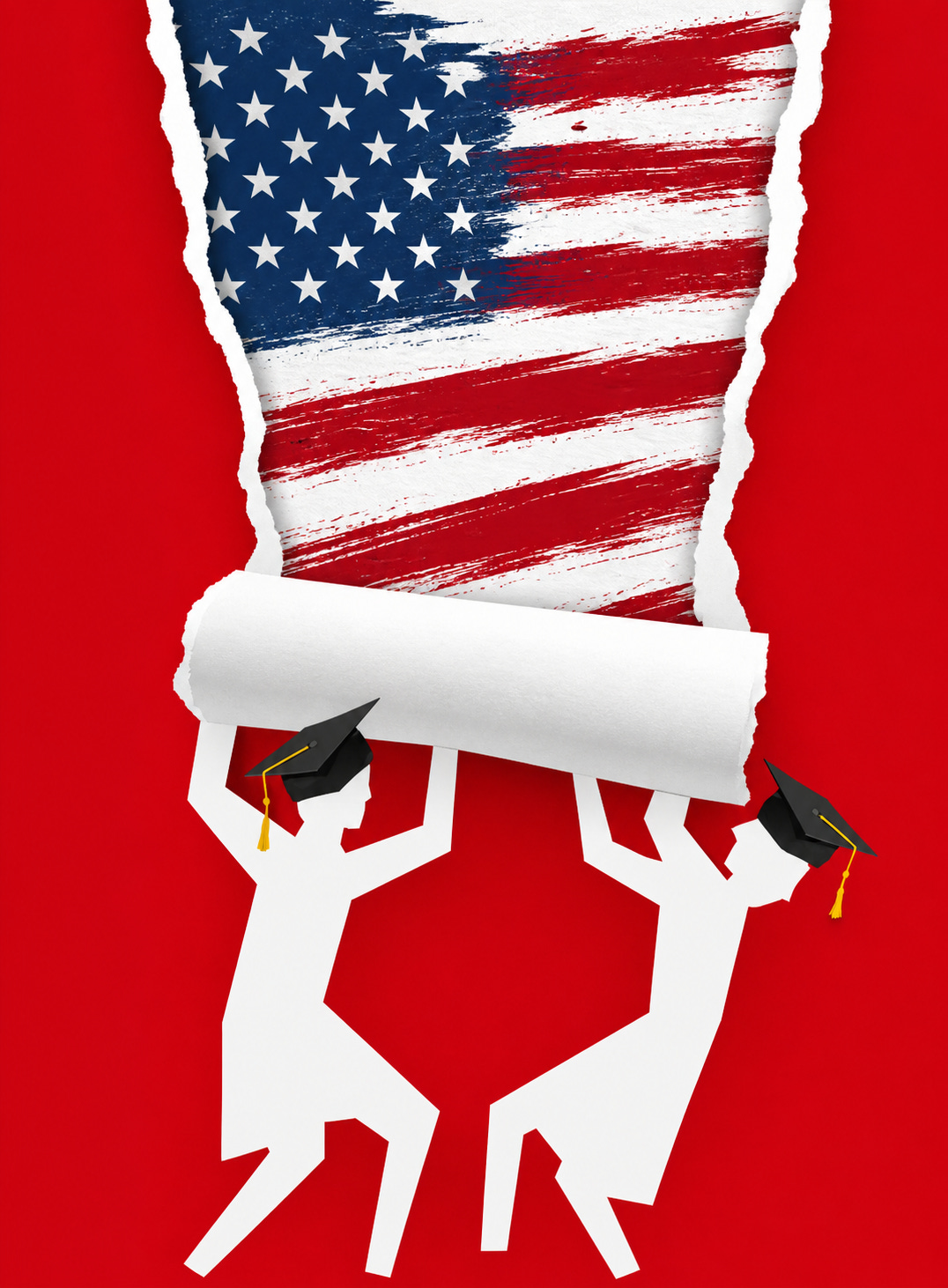
While details continue to emerge, the case has raised serious concerns about the living conditions, safety, and structural vulnerabilities faced by international students. While it is too early to draw a direct link to this specific incident, my several years within American academia compel me to share some broader observations on the systemic challenges these students navigate.
Each year, universities in the United States enroll a significant number of international students. For the 2024–2025 academic year, nearly 1.8 million international students were admitted, a 4.5% increase from the previous year. At many institutions, particularly in science and engineering fields, international students often outnumber domestic students. Most of these students arrive from developing nations, with India serving as the largest source country, accounting for more than 30% of all international students in the U.S.
There is little doubt about their merit or qualifications; these students are among the most talented from their home countries. The U.S. remains the premier destination for global talent, home to a majority of the world’s top-ranked universities. While seeking a world-class education, many students are also driven by the promise of a better life—the classic “American Dream.”
However, this trend raises a critical question: Why are American universities so eager to enroll international students in such high numbers? Why aren’t these spots primarily reserved for domestic students? Two key reasons emerge. First, international students represent a vital source of high-skill, low-cost labor for U.S. institutions. This is driven by a second reality: Many domestic students are unwilling to accept these demanding research and teaching positions at current compensation levels, leaving universities dependent on international recruitment to sustain their programs.
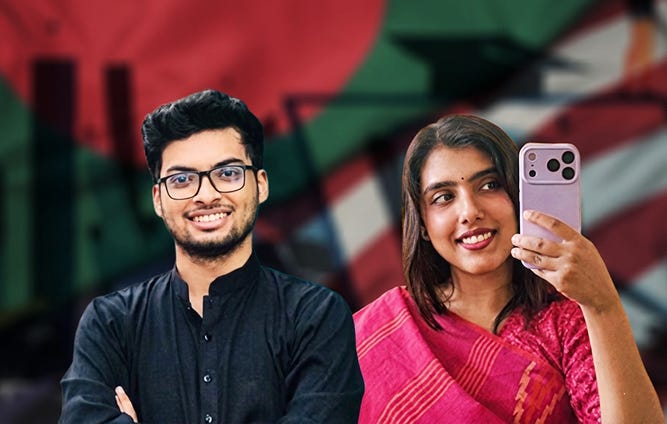
In most U.S. universities, “funding” is rarely a traditional scholarship. Instead, it is an assistantship—a contract requiring teaching or research labor in exchange for compensation that often falls below a living wage. At these levels of pay, few U.S. citizens are willing to accept such roles. For comparison, a service-sector worker at a company like Starbucks can earn roughly $4,000 per month. In contrast, a doctoral-level graduate assistant may earn between $1,000 and $2,000 per month, depending on the institution, while remaining responsible for all living expenses. For the many students with dependents, such as spouses or children, these financial realities create a state of significant, ongoing hardship.
Returning to the case in Tampa, it is important to understand what a “roommate” means in this context. For many international students, shared-housing is not a lifestyle preference but a financial necessity. Meager stipends often force students into living arrangements with strangers or individuals they may not know well, creating conditions that are rarely a matter of choice and, in some cases, are fundamentally unsafe. This is where graduate education, institutional structures, and broader labor dynamics intersect in ways that can place students at risk.
These financial constraints are tightened by strict legal restrictions. Students on F-1visas are generally limited to working 20 hours of work per week in designated roles and are not allowed to seek additional or outside employment. This further constrains their financial and living options. While assistantships may include tuition waivers and health insurance, these benefits do not alleviate the day-to-day struggle for survival. Domestic students receive the same benefits, yet many opt out because the compensation cannot meet basic living needs or cover undergraduate debt—obligations that are more easily met through a standard non-academic salary.
Even after graduation, the playing field remains uneven. In the job market, international candidates often face an “invisible tax” on their credentials; a candidate frequently must be twice as qualified to be seen as equal to a domestic peer. In practice, a PhD-holding international employee is often treated as equivalent to a U.S. citizen with a master’s degree, while an international master’s holder may be equated to an American with only a bachelor’s. Additional experience can help close this gap somewhat, but often only when it is significantly greater—sometimes three or four times more than that of a domestic peer.
From this perspective, the American higher education system arguably resembles a broader pattern of labor extraction, drawing highly skilled individuals from developing countries under economic constraints that domestic students would not simply accept. I view this as a postcolonial pattern: institutions in wealthy nations continue to benefit from the low-cost labor of individuals from formerly colonized regions, not through direct political control, but through structural economic and institutional arrangements.
Comparing it with a postcolonial model is not to say that it is identical to colonialism but that it echoes a historic logic: wealthier systems thrive on the labor of those from economically less powerful regions, under conditions that are fundamentally unequal. In this case, instead of extracting natural resources, institutions in wealthy countries are drawing upon the high-skilled human capital of the developing world.
The extraction dynamic is not unique to academia; a parallel exists in the global garment industry. Bangladesh, for example, is the second largest exporter of apparel to the United States. My work on garment labor movements has shown that international brands often supply all raw materials—fabric, thread, and dye—sourcing only labor from Bangladesh. In effect, these brands are purchasing inexpensive labor rather than full production value.
When tragedies like the one in Tampa occur, public discussions often remain at the surface level. However, it is equally important to examine the structural conditions that shape these outcomes. While there are no simple solutions, several directions are worth considering which I list below: First, developing nations should continue to improve their own education systems, making them more competitive, transparent, and accountable. Second, these countries must address the challenges such as favoritism and politicized recruitment, deep-rooted in their job markets. Governments and institutions must ensure fairness and transparency in the recruitment processes so that talented students feel encouraged to return home after their higher studies abroad. Finally, the universities hosting international students in countries like the United States must take greater responsibility for student safety, including those living off-campus.
While the University of South Florida (USF) has taken initial steps to improve safety and student support services following the Tampa tragedy, these efforts cannot remain isolated. We need comprehensive, system-wide policies across all institutions.
Change will not happen overnight, that is no reason to stop questioning the structures that produce inequality and vulnerability. This starts with reframing how we speak about international students, and I must say that a common attitude should be addressed here as well. We hear many saying: “As international students, you must be grateful for all these opportunities—admission, visa, assistantship, job, etc.—that has been “given” to you in the USA.” Do they really hear their own words? These are simply given to us?
But the idea of “gift” itself is fundamentally flawed. Nothing was given; everything was “earned” through hard work, resilience, and intellectual capacity. It was earned at the cost of years away from family, of missing the touch of parents and home, and passing all special days and moments alone. Opportunities are rather earned by navigating isolation and loneliness, stress and anxiety, insecurity and uncertainty, and culture shock and backlash, ultimately accepting systemic exclusion. Recognizing this reality is the first step toward a more honest and equitable conversation.
About the Author
Dr. Sherin Farhana is an Instructor in the Department of Mass Communication at Nicholls State University. Her expertise includes media relations, advertising, and digital communication. Her research centers on social movements, ethical business communication, and the role of digital communication in advancing social change. She can be reached at sherin.moni@nicholls.edu.
Disclaimer: The views expressed in this article are the author's own and do not necessarily reflect The Insighta's editorial stance. However, any errors in the stated facts or figures may be corrected if supported by verifiable evidence. | A guest post by
|