

ADB Unveils $70B Plan to Link Asia’s Power Grids, Digital Networks
ADB unveils a $70B plan to link Asia’s power grids and digital networks by 2035, aiming to expand clean energy trade, broadband access, and regional integration across Asia and the Pacific.
এশিয়া ও প্রশান্ত মহাসাগরীয় অঞ্চলে বিদ্যুৎ ও ডিজিটাল সংযোগ জোরদারে ২০৩৫ সালের মধ্যে ৭০ বিলিয়ন ডলারের পরিকল্পনা ঘোষণা করেছে এডিবি। নবায়নযোগ্য জ্বালানি, বিদ্যুৎ বাণিজ্য ও ব্রডব্যান্ড ইন্টারনেট সংযোগ সম্প্রসারণে এ উদ্যোগ আঞ্চলিক সহযোগিতাকে নতুন মাত্রা দিতে পারে।
SAMARKAND, UZBEKISTAN (3 May 2026) — The Asian Development Bank (ADB) will support $70 billion in energy and digital infrastructure initiatives by 2035, aiming to connect power grids, expand cross-border electricity trade, and improve broadband access across Asia and the Pacific.
ADB President Masato Kanda said energy and digital connectivity will be central to the region’s future, noting that more integrated systems can lower costs, expand economic opportunities, and deliver reliable services to hundreds of millions of people.
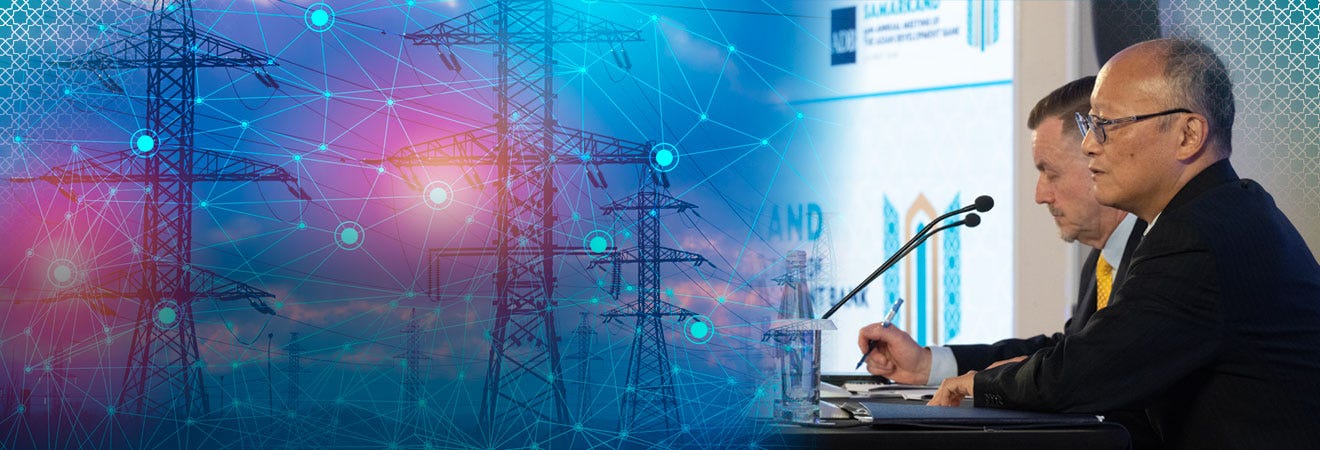
Under the plan, ADB will launch two major initiatives—the Pan-Asia Power Grid Initiative and the Asia-Pacific Digital Highway—designed to strengthen regional connectivity and support sustainable growth.
The Pan-Asia Power Grid Initiative aims to mobilize $50 billion by 2035 to develop cross-border power infrastructure. The program will focus on transmission networks, grid integration, substations, energy storage, and digitalization of power systems. It will also support renewable energy generation linked to electricity trade, including export-oriented projects and regional energy hubs.
ADB estimates that the initiative will integrate around 20 gigawatts of renewable energy across borders, build approximately 22,000 circuit-kilometers of transmission lines, and improve energy access for 200 million people. It is also expected to generate about 840,000 jobs and reduce regional power sector emissions by 15 percent.
The bank plans to finance roughly half of the $50 billion from its own resources, with the remainder to be mobilized through co-financing, including private sector participation. Additional technical assistance will support regulatory alignment, feasibility studies, and standard-setting.
The initiative marks a shift from bilateral energy exchanges to a broader regional power trade framework, building on existing cooperation platforms such as the South Asia Subregional Economic Cooperation programme, the Bay of Bengal Initiative grid plans, the ASEAN Power Grid, and the Central Asia Regional Economic Cooperation Energy Strategy 2030.
Meanwhile, the Asia-Pacific Digital Highway will mobilize $20 billion by 2035 to expand digital connectivity across the region. Investments will target fiber-optic networks—both terrestrial and subsea—satellite links, and regional data centers, alongside policy and regulatory support, including cybersecurity measures.
The digital initiative aims to provide first-time broadband access to 200 million people and enhance connectivity for an additional 450 million users. It is expected to reduce connectivity costs in remote and landlocked areas by up to 40% and create approximately 4 million jobs.
ADB will contribute about $15 billion to the digital program, with an additional $5 billion expected from co-financing partners. As part of the effort, a Center for AI Innovation and Development will be established in Seoul, supported by the Government of the Republic of Korea, to promote responsible AI adoption and train around 3 million people in digital skills by 2035.
ADB Targets Critical Minerals Supply Chain
Alongside its broader connectivity push, the Asian Development Bank has launched a new financing facility to help Asia and the Pacific build critical minerals supply chains essential for clean energy, electric vehicles, and digital technologies.
Announced by ADB President Masato Kanda, the initiative aims to move the region beyond raw material extraction into higher-value processing and manufacturing. Backed by grants and catalytic financing—with contributions from Japan, the United Kingdom, and Korean partners—the facility will support project preparation, policy reforms, and investment across the minerals value chain, while ensuring strict environmental and social standards.
The announcement was made at the ADB 59th Annual Meeting held in Samarkand, Uzbekistan on May 3, 2026, , where regional leaders and development partners gathered to discuss sustainable growth, energy transition, and economic cooperation across Asia and the Pacific.
Founded in 1966, the Asian Development Bank is a leading multilateral lender owned by 69 members, including 50 from the Asia-Pacific region, and focuses on fostering sustainable, inclusive, and resilient growth.